
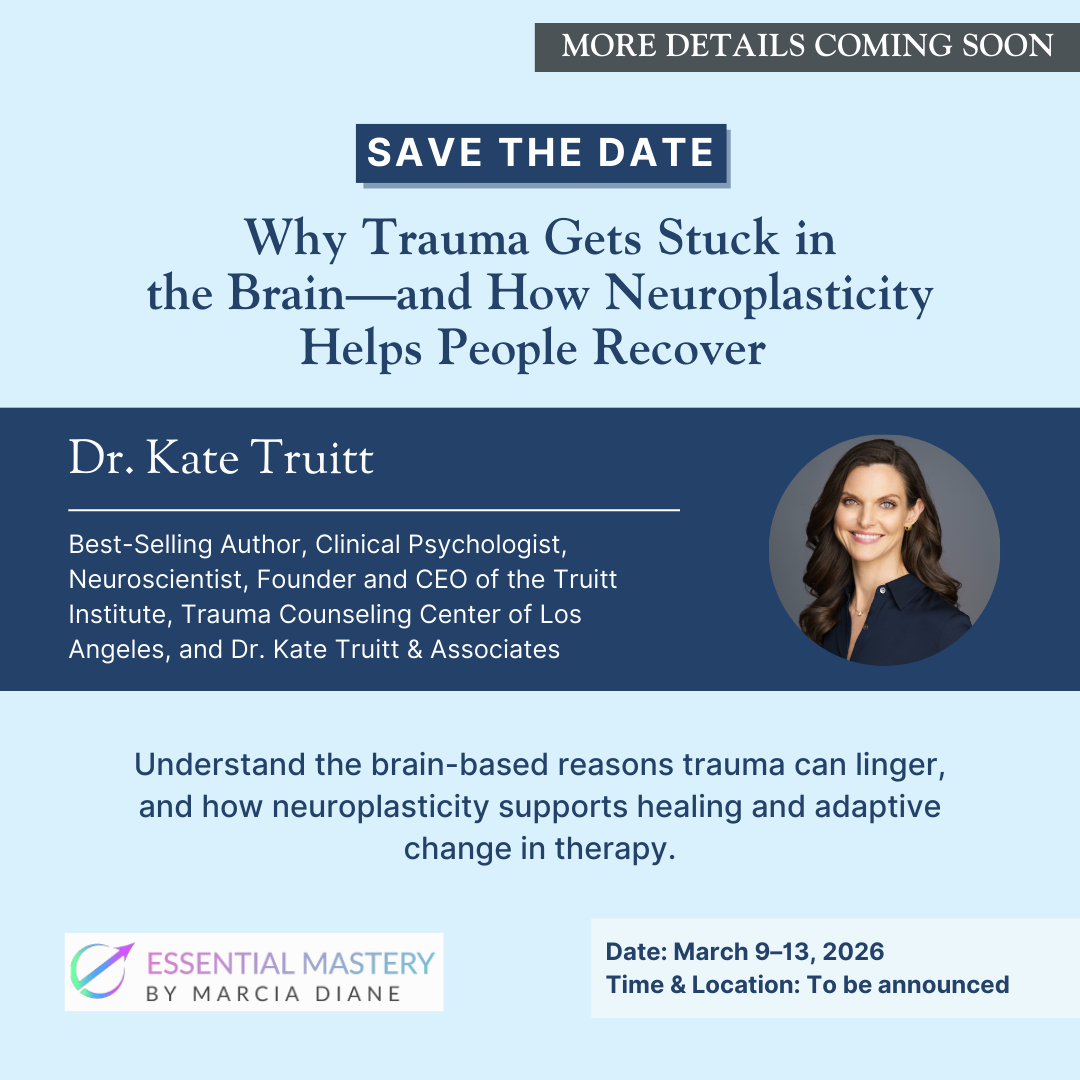
Why Trauma Gets Stuck in the Brain—and How Neuroplasticity Helps People Recover
Trauma becomes persistent because the brain adapted for survival. Under threat, protective circuits take the lead. Over time, those same patterns can limit flexibility, regulation, and choice.
In this session, Dr. Kate Truitt, clinical psychologist and applied neuroscientist, explains the neurobiology behind why trauma feels “stuck” and how recovery becomes possible through neuroplasticity.
Inside this session:
• How the amygdala, hippocampus, and prefrontal cortex shift under stress
• Why trauma often shows up in the body before it reaches language
• How protective patterns become reinforced over time
• What neuroplasticity requires in order to update old survival predictions
• Practical applications for rebuilding regulation, integration, and agency
This is an applied neuroscience conversation designed to make trauma responses understandable and recovery biologically grounded.