
Bridging Despair and Safety: A Trauma-Informed Approach to Suicidality in Youth
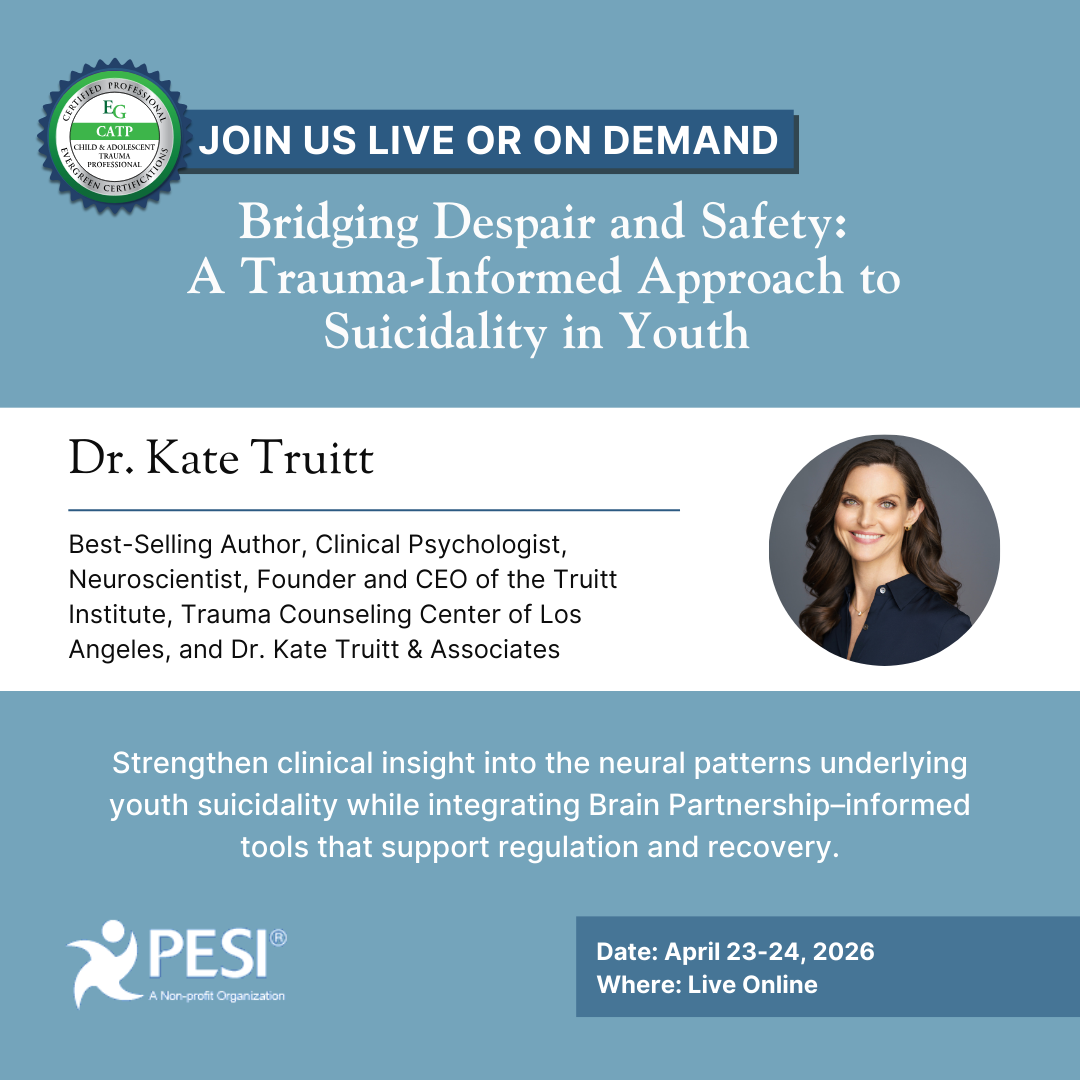
Suicidality in children and adolescents is not only a psychological crisis. It is a whole-brain event shaped by trauma, attachment disruption, and survival-driven coping patterns that overwhelm the nervous system.
In this session, Dr. Kate Truitt introduces the Brain Partnership framework to help you understand how pain becomes organized in the brain, and how pathways of safety and hope can be rebuilt through neurobiological processes.
You will explore how to:
Identify neural loops that reinforce hopelessness
Apply regulation-focused strategies that stabilize the nervous system
Re-engage the thinking brain through safety-based interventions
Recognize the risks and limitations of commonly used approaches
You will leave with a practical toolkit of immediately applicable techniques designed to help young clients find grounding, regulate distress, and reconnect with a sense of hope.
On April 23, the first day of the conference, Dr. Truitt will also serve as moderator throughout the day, helping create continuity and coherence across speaker sessions.