
Neuroplasticity in Practice: How Therapists Can Support Lasting Change in Trauma Recovery | Clinical Conversation
You care deeply about the people sitting across from you. And sometimes, despite everything you bring to the room, progress feels slow — or stuck.
The brain responds to threat in ways that are deeply patterned and persistent. Understanding how and why that happens gives you something solid to stand on as a clinician.
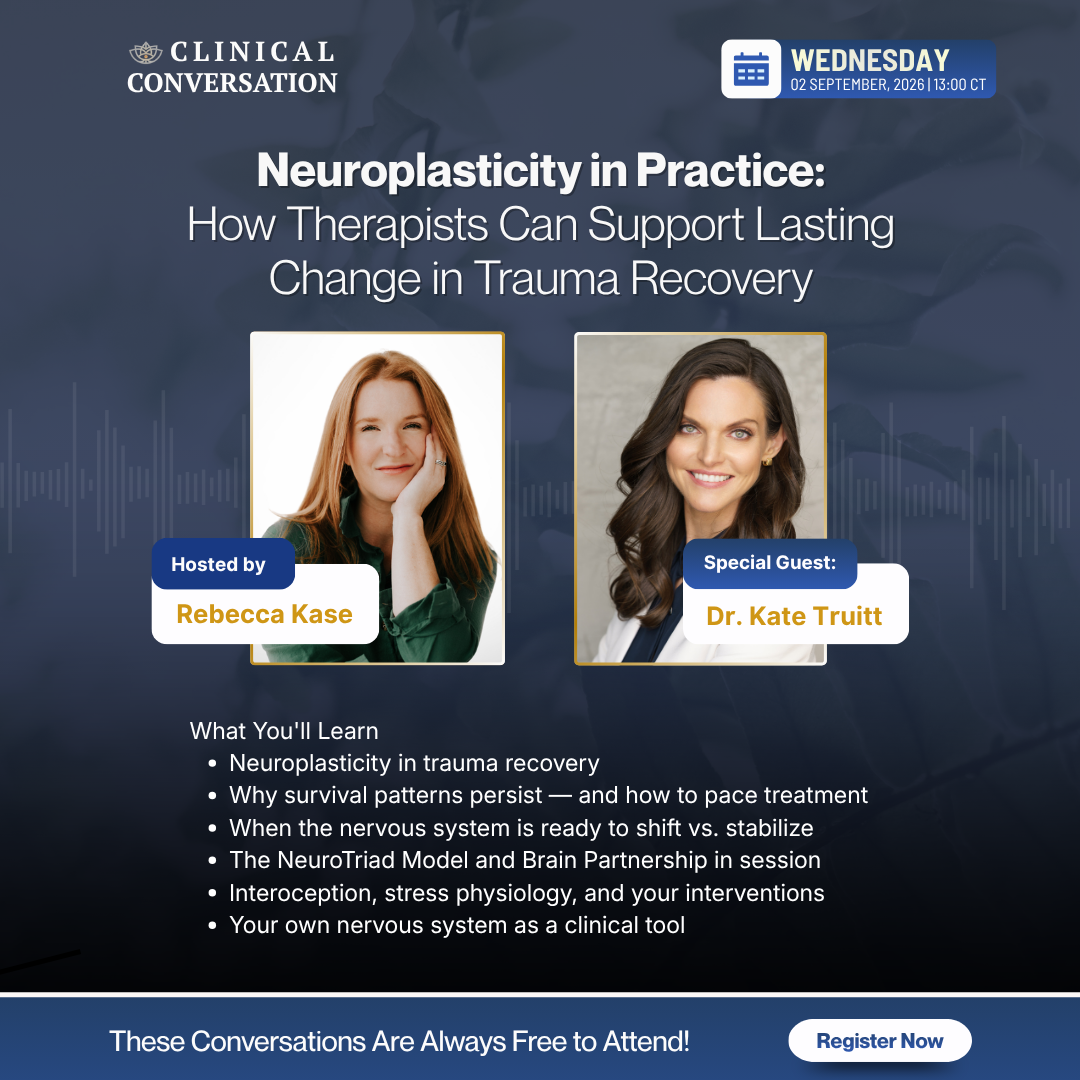
Join Dr. Kate Truitt, PhD for a warm, honest clinical conversation designed for therapists who want to feel more grounded and confident in their trauma work. Neuroscience translated into something you can actually use — with your real clients, in your real sessions, and space for the questions you've been sitting with.
You'll walk away knowing how to:
Recognize what your client's nervous system needs before you push for change
Apply the NeuroTriad Model and Brain Partnership framework with real clinical cases
Use interoception and stress physiology as guides in the room
Sustain yourself in this work by understanding your own nervous system too